Typically 4–6 visits and a rehab programme
Knee pain
Pain at the front of the knee from running, stairs or squatting, and knees that ache after sport or a long walk.
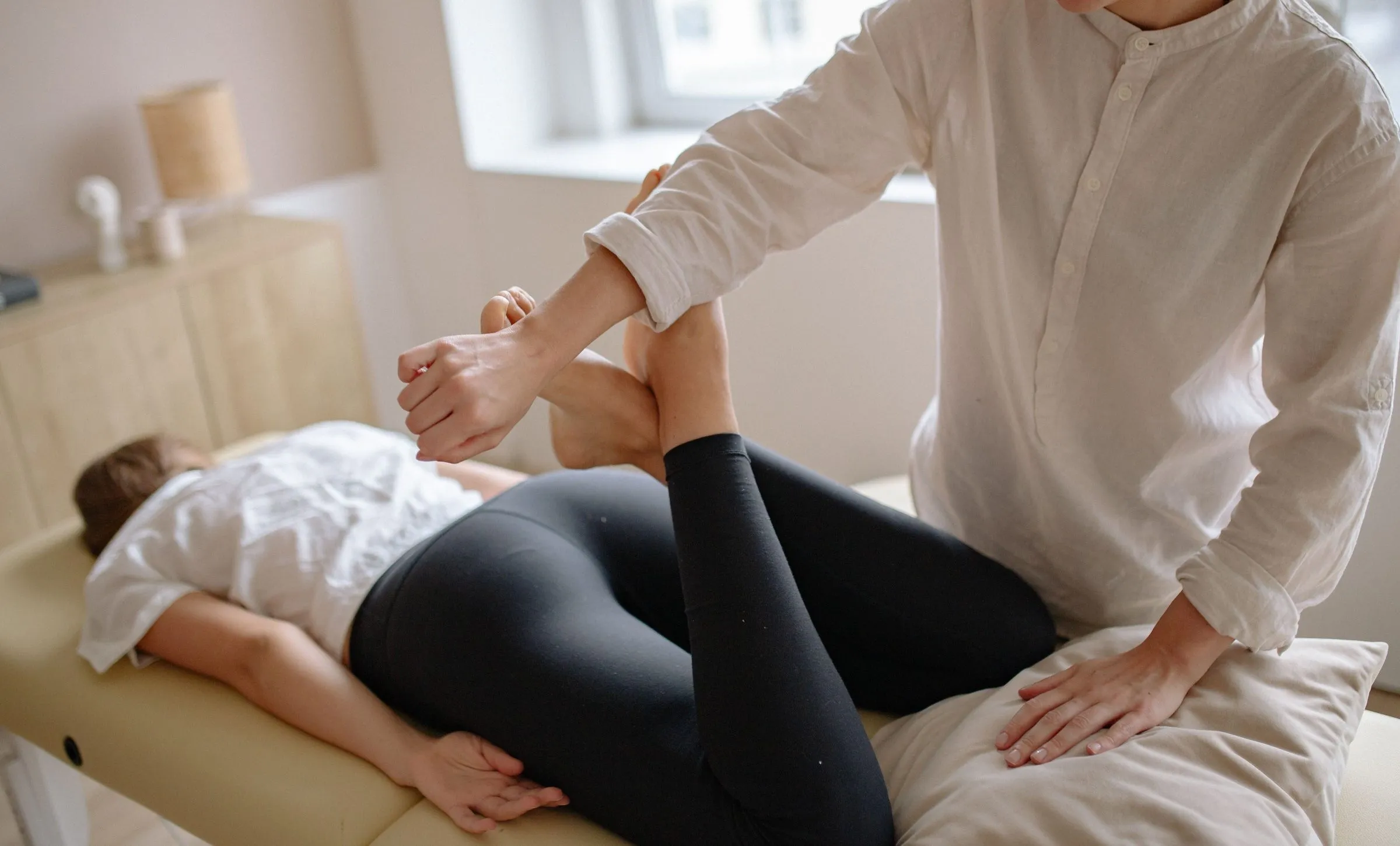
How we treat it
Most of the knee pain we see is at the front of the knee and comes from load rather than damage: the knee is being asked to do more than the muscles around it are ready for. Runners, new gym-goers and anyone who has just increased their mileage are the usual patients.
Callum assesses the knee in the context of the hip and foot above and below it. Weak hip muscles let the knee drift inward on every step; stiff ankles push the load up the chain. Treatment includes soft-tissue and joint work to settle the pain quickly, then a progressive strength programme that most people can do at home.
If the knee has been injured — a twist, a pop, swelling within hours — we examine the ligaments and cartilage and refer you on promptly if it needs imaging.
Common signs
- Pain around or behind the kneecap
- Worse going down stairs or after sitting
- Aching after running, especially downhill
- Stiffness when you first stand up
See a doctor first if you have
- A hot, red, swollen knee with fever
- A knee that locks or gives way after a twisting injury
Call 999 or go to A&E for anything sudden and severe. For urgent advice, call 111.
“Callum had me running again three weeks before my half marathon. The rehab sheet was four moves, not forty, so I actually did it.”