Typically 5–6 visits, then check-ups if needed
Tension and neck headaches
Headaches that start at the base of the skull or behind one eye, often on the same side, often worse after a long day at a screen.
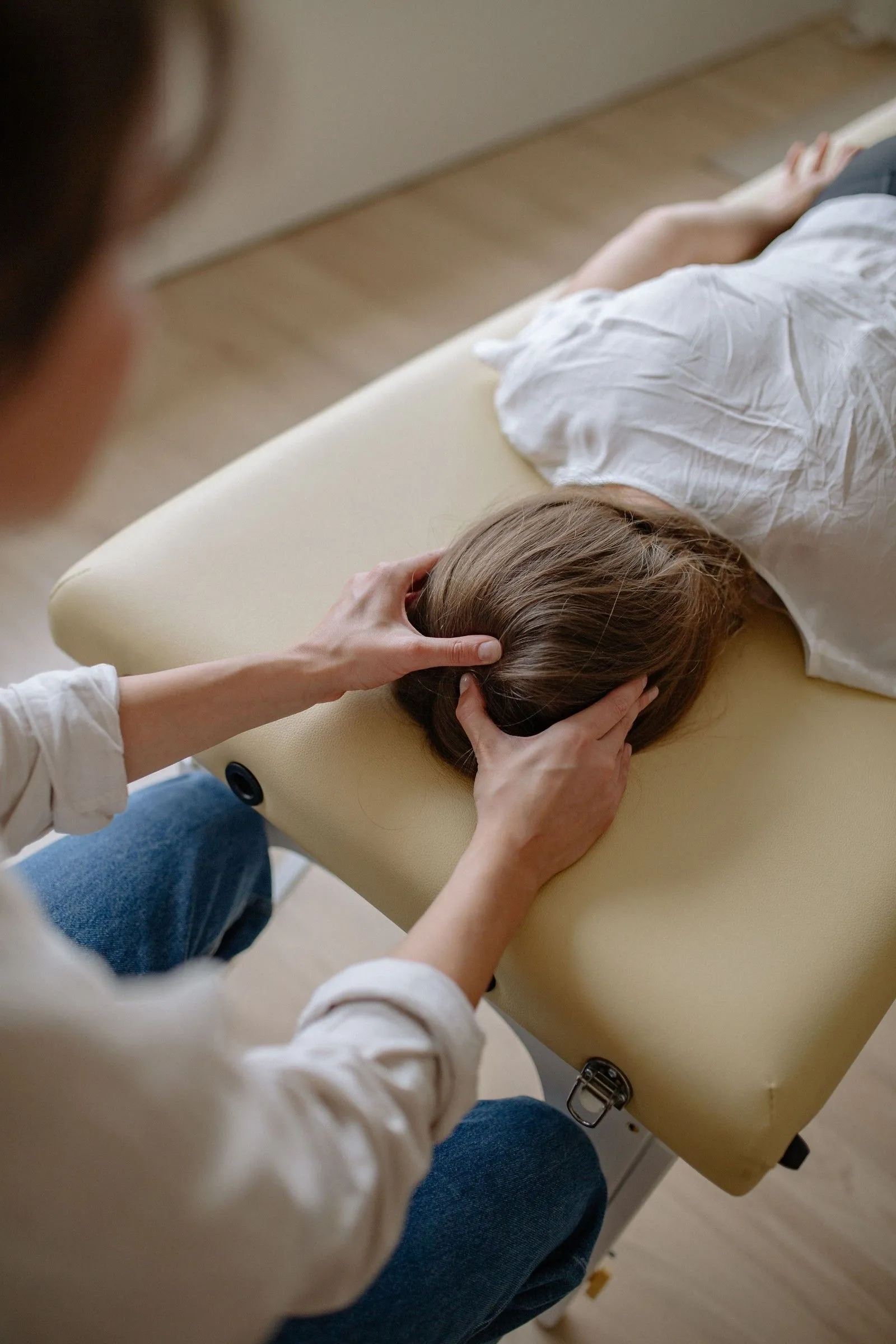
How we treat it
Not every headache is a neck problem, but a large share of the ones we see are. A cervicogenic headache starts in the upper joints of the neck and is felt in the head — usually at the back, wrapping forward to the temple or behind one eye.
We start by working out which kind of headache you have. Migraine, tension-type and neck headaches can overlap, and some headaches need a GP rather than us; we ask the questions that separate them. If pressing on the upper neck reproduces your familiar headache, that is a strong sign we can help.
Treatment focuses on the top two or three joints of the neck and the small muscles beneath the skull, with gentle mobilisation, soft-tissue release and exercises for the deep neck flexors. Most patients keep a simple headache diary so we can both see the days between headaches getting longer.
Common signs
- Headache that starts at the back of the head and wraps forward
- Usually one side, often the same side each time
- Worse after screen work, driving or poor sleep
- Tender points in the neck that reproduce the headache
See a doctor first if you have
- The worst headache of your life, arriving suddenly
- Headache with weakness, slurred speech or changes in vision
Call 999 or go to A&E for anything sudden and severe. For urgent advice, call 111.
“The headaches were a neck problem all along. I wish I had come two years and a lot of paracetamol earlier.”